Introduction
Each real estate agent or company trying to expand its clientele must focus on real estate lead creation. Agents may draw in leads and turn them into devoted clients who are prepared to buy or sell a house by using the right techniques and resources.
We’ll look at strategies for generating real estate leads in this comprehensive guide. We’ll go through everything you need to know to produce a consistent flow of high-quality leads, from prospecting and networking to utilizing social media and email marketing.
This guide will give you the information and tools you need to succeed in real estate lead generation, whether you’re a new agent trying to increase your clientele or an established professional looking to widen your clientele.
Lead Generation for Real Estate
The process of finding and luring new consumers or clients for a firm is known as lead generation. Lead generation, in the context of real estate, refers to the methods and techniques employed by brokers and agencies to identify and draw in people with an interest in buying or selling a home. Real estate lead generation aims to build a pipeline of prospective consumers that can be nurtured and ultimately transformed into paying clients.
Real estate lead-generating techniques come in a variety of forms, including conventional and modern ones. The employment of print advertisements, networking at community gatherings, and going to open houses are examples of traditional strategies. On the other hand, digital methods make use of internet resources like platforms and tools to reach a larger audience. This could entail starting a website or blog, using social media, or spending money on internet advertising.
Regardless of the particular techniques employed, recognizing the target audience and developing a message that speaks to their needs and interests are crucial for effective real estate lead generation. Agents can gain trust and establish themselves as informed, dependable experts by determining the problems that potential consumers are experiencing and providing answers.
In general, developing a successful real estate firm depends on generating real estate leads. Agents can create a strong pipeline of leads that can be developed and turned into devoted customers over time by combining traditional and digital approaches to find and attract potential consumers.
Understanding the Real Estate Funnel
Real estate brokers and firms that want to draw in, engage, and turn prospective consumers into devoted customers must comprehend the real estate sales funnel. The prospect’s path from their initial knowledge of a product or service to their ultimate decision to buy or sell is represented visually by the sales funnel. Agents may create effective strategies for guiding prospects through the buying or selling process by understanding the different stages of the sales funnel and the activities that need to be taken at each stage. This blog will examine the various stages of the real estate sales funnel and offer advice and strategies for each stage’s optimization to improve the likelihood of conversion and, eventually, success in the real estate sector.
Also Read: SEO for Real Estate | Strategies for Increased Online Visibility
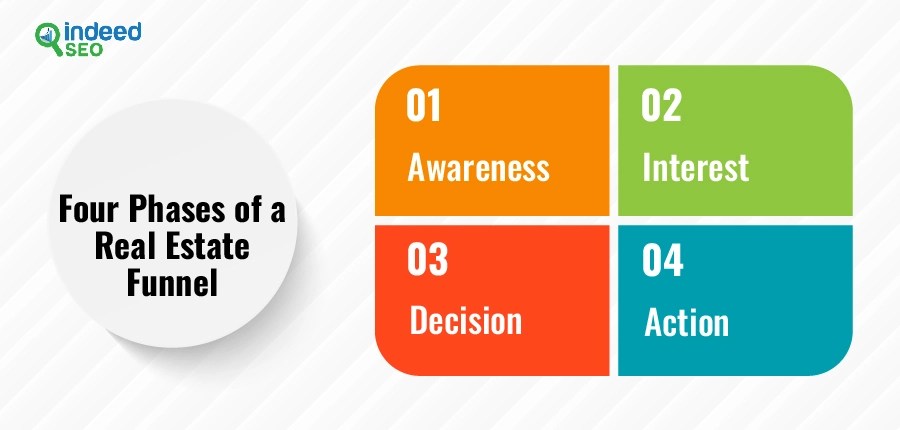
The Four Phases of a Real Estate Funnel
Four separate stages make up the real estate sales funnel, which leads potential customers through the purchasing or selling process. Every stage of the funnel offers agents a special chance to engage and connect with prospects while also giving them the knowledge and assistance they need to make wise choices. The four stages of the real estate funnel will be thoroughly examined in this blog, along with the essential tactics and approaches that agents can employ to maximize each stage. Understanding the real estate sales funnel can help you create a more successful and long-lasting real estate firm, whether you’re an aspiring new agent or an established expert trying to enhance your sales and marketing methods.
✅ Awareness
The first stage of the real estate funnel is the awareness phase, during which prospective customers become aware of a product or service. At this point, potential buyers can be looking at homes online, going to open houses, or getting referrals from friends and family. The objective of the awareness phase is to draw in these potential customers and give them the knowledge and tools they require to go to the next step of the funnel.
Agents can utilise a range of strategies, including building a business website, making their listings search engine-friendly, and utilizing social media platforms to advertise their services, to maximise the awareness phase. Agents can, for instance, produce blog entries or films that highlight their knowledge and offer beneficial advice for purchasing or selling a home. To reach a larger audience and increase traffic to their website, they can also use targeted internet advertising.
Developing relationships with potential customers is a key component of the awareness phase. Agents can position themselves as dependable and competent authorities in the real estate market by participating in regional events and networking with other professionals. Additionally, they can provide free materials and consultations to prospective clients, giving them access to important data and insights that can guide their decision-making.
In general, the real estate funnel’s awareness stage is crucial for drawing in and retaining potential customers. Agents can raise the possibility that prospects will advance to the next stage of the funnel and eventually turn into devoted customers by utilising a combination of online and offline approaches to grab their attention and develop connections.
✅ Interest
The second step of the real estate funnel is the interest phase, during which prospective customers start to express interest in a product or service. At this point, potential clients may have requested a virtual tour of a property, filled out a contact form on an agent’s website, or gone to an open house. The purpose of the interest phase is to develop these possibilities by giving them more resources and information to aid in their decision-making.
Agents can employ a range of strategies, including as customised email marketing, follow-up phone calls, and virtual tours of properties, to maximise the interest phase. Agents can, for instance, offer to organise a virtual tour of a property that a prospect has indicated an interest in, or they can send a series of emails with further details on the properties the prospect has shown interest in.
The development of client trust is a key component of the interest phase. Agents can establish themselves as dependable and trustworthy professionals who are dedicated to satisfying the needs of their consumers by offering tailored and timely information. Also, they can offer to address any queries or worries that potential customers may have, giving them the assistance they need to make wise choices.
In general, developing relationships with potential customers is crucial throughout the interest phase of the real estate funnel. Agents can boost the possibility that prospects will advance to the next step of the funnel and eventually turn into devoted customers by combining personalised communication and follow-up.
✅ Decision
The third stage of the real estate funnel is the choice phase, during which potential customers are prepared to choose a product or service. Prospects may have honed their choices at this point and are prepared to submit an offer or sign a contract. The objective of the decision phase is to offer prospects the assistance and tools they require to decide with confidence and proceed with a transaction.
Agents can employ a number of strategies, such as giving thorough property information, assisting negotiations, and providing support throughout the transaction process, to maximise the choice stage. Agents, for instance, might offer thorough details on a property’s attributes, setting, and potential worth to help potential buyers decide whether to submit an offer. Additionally, they can help buyers and sellers negotiate, ensuring that both parties are happy with the terms of the contract.
Giving direction and support throughout the transaction phase is a crucial component of the decision phase. This can involve guiding clients through financial and legal procedures, making recommendations for reputable experts, and keeping clients updated on the status of the transaction. Agents may help to assure a great experience for their clients and raise the possibility of repeat business and referrals by offering top-notch service and support throughout the transaction.
In general, the decision stage of the real estate funnel is essential to completing a deal and developing enduring customer connections. Agents can boost the likelihood of a successful sale and a satisfied client by giving thorough information, smoothing discussions, and providing direction and assistance throughout the transaction process.
✅ Action
The stage where potential clients decide to proceed with a real estate transaction is known as the “action phase” of a real estate funnel. This stage is essential since it determines whether a sale will be a success or a missed opportunity. The potential client is now actively looking to work with a real estate agent or broker and has advanced past the first interest stage. In the action phase, the agent’s job is to help the client through the process, offer assistance and knowledge, and make sure the transaction goes off without a hitch.
Building a trusting relationship with the client is the first stage in the action phase. The agent must establish a rapport built on mutual respect and trust while showcasing their experience and understanding of the neighbourhood market. To do this, you might undertake a needs analysis to understand the aims and objectives of the client and find attributes that fit those requirements. Also, the agent must be prepared to answer any queries the customer may have regarding the purchasing or selling process, as well as to offer advice on financing choices and other crucial factors.
The agent’s job is to facilitate the negotiation process once the customer has found a property they are interested in. Here, offers and counteroffers are made before the sale’s conditions are settled and the contract is signed.
The agent must also supervise the closing procedure, making sure that all required paperwork is signed, submitted, and that any concerns are remedied. This may entail coordinating with attorneys, mortgage brokers, and other experts to make sure the transaction is finished on schedule and to everyone’s satisfaction.
In general, the action stage of a real estate funnel necessitates a blend of knowledge, interpersonal abilities, and focus on detail. Real estate agents may assist clients in navigating the complicated and frequently difficult process of purchasing or selling a property by offering top-notch service and support.
Bonus Material: Real Estate Digital Marketing | Tips For Boost Brand Visibility
Pillars that support the foundation of real estate lead generation system
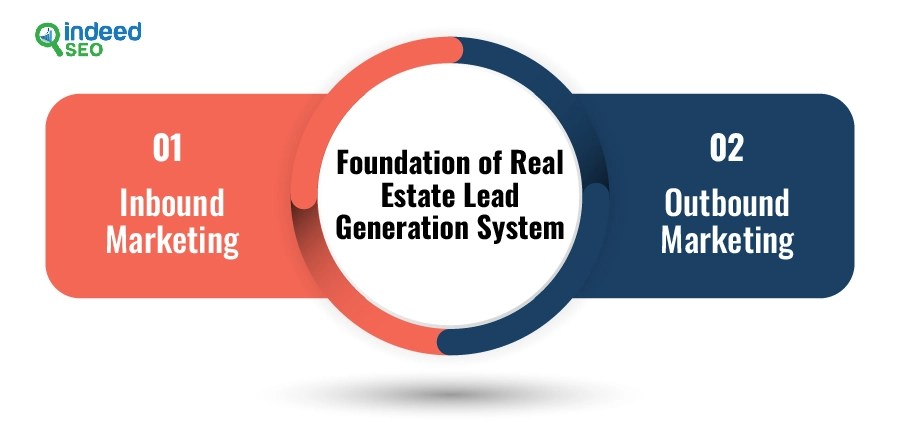
Two fundamental building blocks of a real estate lead generation system are inbound and outbound marketing. Both strategies attempt to draw potential customers and provide leads, but they are different in their strategies and methods.
✅ Inbound Marketing
A customer-centric strategy called inbound marketing uses the creation and dissemination of useful content to draw in new customers. Many formats for this content are possible, including blog entries, e-books, webinars, and social media updates. The objective is to offer beneficial and educational information that meets the requirements and problems of potential customers. Inbound marketing does this by drawing in customers who are already interested in real estate and seeking solutions to their issues.
Inbound marketing is affordable and helps businesses establish credibility and trust with potential customers. It is a long-term strategy that needs persistence and patience, but it can produce high-quality leads and position the agent or broker as a thought leader in the industry.
✅ Outbound Marketing
On the other hand, outbound marketing is a more conventional and proactive strategy that tries to connect with potential customers through direct communication or advertising. Email marketing campaigns, cold calling, direct mail, and paid advertising are examples of outbound marketing techniques. With customised messages and offers, the objective is to generate as many leads as possible.
FAQs
Q1: From what source can the best real estate leads be generated?
A; The best leads are generated through word of mouth. The finest evaluations come from word of mouth, not from sponsored website leads, therefore it’s crucial to build and keep solid relationships with both present and former clients. The development of repeat and referral business for you depends on having a genuine relationship with your clients.
Q2: When it comes to generating leads for real estate how can strategy help in strengthening your bonds with the audience?
A: Focusing on establishing and fostering relationships with the audience is one efficient method of generating leads for real estate. This entails comprehending the requirements and discomfort areas of potential customers and offering helpful and educational content that allays their worries. Real estate professionals can build credibility and trust with their audience by developing a strong brand presence and exhibiting knowledge and authority in the industry. Many platforms, including social media, email marketing, and blog articles, can be used to do this. Real estate agents and brokers may produce top-quality leads and establish a solid brand in their area by continually adding value and interacting with their audience.
Q3: How can Search Engine Optimization help in Real Estate Lead Generation?
A: Real estate lead creation can be effectively done with the use of search engine optimization (SEO). Real estate professionals can improve their exposure in search engine results pages (SERPs) and draw in more qualified leads by optimising their websites for pertinent keywords and phrases. Real estate agents may rank higher in search engine results pages (SERPs) with the aid of SEO, which may increase traffic to their websites. There may be more leads and ultimately more purchases as a result of this increased traffic. By offering helpful and educational content that responds to the inquiries and concerns of potential clients, SEO may also assist real estate professionals in establishing themselves as a reputable authority in their market.
Conclusion
In conclusion, generating real estate leads is an essential part of every flourishing real estate firm. Real estate agents can draw in high-quality leads and position themselves as recognised authorities in their sector by combining inbound and outbound marketing techniques. There are several ways for real estate professionals to create leads and boost their sales, from cultivating relationships with the audience to utilising SEO strategies. Real estate professionals can develop a thorough lead generation system that attracts and converts targeted leads into devoted customers by knowing the demands and pain points of potential clients and offering helpful and educational material. Real estate professionals may reach their lead generation objectives and create a healthy and profitable business with the correct strategy and a dedication to consistency and excellence.
 IndeedSEO - Top Rated SEO Company